taco tuesday, Tourettes, writing

TIC-O Tuesday! Wait, I Have a Question (Coronavirus, Anxiety, TS and More!)

ddd

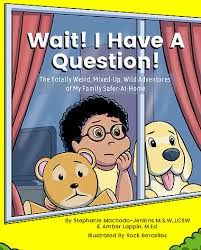
When the Coronavirus hit in March, many parents were faced with questions about jobs, healthcare and homeschooling. And they weren’t the only ones. Lots of kids had questions, too. Luckily authors Amber Lappin, M. Ed. and Stephanie Machado-Jenkins, M.S.W., LCSW created a delightful book Wait, I Have a Question! which put a lot of younger minds to ease.

Since anxiety is such a common co-morbid condition of T.S., I reached out to these authors who graciously granted me an interview. And so, to re-boot my Taco Tuesday (which I’m renaming TIC-O Tuesday) here’s what these professionals had to say.

Book Description

Wait! I Have a Question!  is a book written for families with young children who are trying to find out how to explain the mixed-up, wild world of social distancing. Beautiful illustrations and a relatable story help kids make a little sense of this WEIRD crisis.

What Kinds of Kids Would Benefit From this Book?

The authors wrote, “We’re hoping children ages 3-7 will relate to Sebastian, a young boy who has BIG questions about why he has to stay at home, why his brother’s home from college, and how his sister is going to school. We hope that Sebastian’s feelings will be familiar and that the ways he learns to navigate them will open discussions for families.”

Why They Wrote It? (Psst: Steph and Amber became friends in high school- Class of ‘90!)

Steph began to first see the need in her client care. Parents were struggling with navigating the challenges of little separation between work and home life, and littles were responding to the physical presence of their parents and the lack of their availability during “work” hours.  Here’s the actual text:

THE BEGINNING.jpg

(Note from Andrea – any writers out there – this is how things get started sometimes. Check out my site over here or follow me on Facebook for more encouragement!)

Stephanie and Amber’s Professional Backgrounds

ephanie

Stephanie Machado-Jenkins is a clinical Social Worker.  She graduated from UCLA with a BA in Social Psychology and USC with a Master in Social Work. She owns a private practice and specializes in treating adults with a trauma history.  “I combine old fashioned ‘talk’ with expressive therapies,” she reports. She also teaches at a local university in their School of Social Work Department and serves as a field instructor for Master level Social Work students who are learning the art of clinical work.

amber

Amber began as a preschool teacher at ABC Child Care Centers in Temecula, CA, where she still works today. “This gave me an excellent foundation for learning to love and care for children-and the people who care for them,” she says. In the years that followed, she wore many hats: in the preschools as a curriculum and literacy specialist, in a large children’s ministry as a part of the admin team, as a trainer and as a curriculum writer and consultant.

“I soon found that my biggest passion was in caring for the adults who care for children, so I went back to school to earn a BS in Human Development at Hope International University, and a M.Ed. with a specialty in Early Education at Grand Canyon University. Now, I am part of the faculty team at Mt. San Jacinto’s Teacher Education and Developmental Studies Department (TEDS), a foster parent educator for Riverside City College and I still get to work with ABC and as a freelance a conference speaker, trainer, and writer.”

Personal Background

Stephanie is a first generation Mexican American and the daughter of an immigrant Mother.  “I grew up in the Los Angeles area and moved with my family to Riverside County in my Junior year in high school. I moved to West Los Angeles in 1990. I continue to reside in Southern California with her husband David and son, Xavier.”

Amber lives in Riverside County with her husband Jason and 20 year old twin daughters. “We also have a three-legged cat and a perfect dog.” She goes on to say, “My son works as a firefighter in New Mexico- which is way too far away for my liking.” She and her husband will celebrate their 29th wedding anniversary this year. “In our pre-pandemic lives, our hobbies were travel and eating at restaurants. Now, our hobbies are staying thankful and trying not to walk in on each other’s Zoom calls.”

Kids, Anxiety and This Book

In Wait! I Have a Question! Sebastian has GREAT ideas for addressing all sorts of feelings, including anxiety.  His “I CAN” list is a nice start. Instead of focusing on what he wasn’t allowed to do while social distancing, he made a list of things he could do.  Caregivers who are working with children struggling with anxiety can help kids make a list of things they can do, and then use it to help them focus on the now instead of what has happened or what might happen.

The authors stated, “Depending on your faith tradition, you may also find prayer helpful. It’s important that we don’t teach our kids that praying is a magic shield that keeps us safe from germs. Instead, we can use the time in prayer and meditation to take our worries and cares to God, and allow God to calm our hearts and minds. Incorporating deep breaths and undistracted times can settle our spirit as well as benefit our bodies.” They go on to add, “You may find apps like Calm and Headspace helpful.  Each app has a number of soothing meditation recordings that are great for kids.”

Talking About Feelings

Stephanie says, “I also strongly recommend that parents encourage their children to talk about how they feel.  Sometimes adults overlook that their children are also hearing newscasts that talk about people who are sick and the numbers of people across the world that have died.  This can have huge impacts on our children.  We have developed a conversation talking guide for this reason.  We encourage you to use the guides and get your children processing.”

In addition to talking about feelings she adds, “Movement is also a huge help.  In the last few weeks, we have enjoyed urban walking paths and outside water play (it’s been hot here) and this is also a good source of recreation and fun!”

Parents and Self-Care

(Note from Andrea – Ya’ll know I love this topic!) The writers encourage parents to engage in their own self-care. Stephanie says, “I am mindful of the fact that many of us no longer have work-life separation that could create an incredible imbalance in how we feel.  It’s important to set aside time to engage in activities that you enjoy.  Also, keep in mind that doing ‘nothing’ is in fact doing ‘something.’”

Routine vs. Play in Times of Quarantine

“Structure is important,” Stephanie says, “And it’s essential to lean into play and creativity.  Dr. Dan Siegel says, ‘Play produces possibility and potential.’ I have and will continue to stand by this. These times require an outlet so that we can move anxious and worried energy ‘up and out,’” she insists, going to on to emphasize, “All sorts of play allows us to rid ourselves of the feelings that weigh on us.  I’ll add that play is not just for kids.  Adults need to play too!  I regularly engage in play so that I feel connected to myself and that I am connected to a creative outlet that restores my soul.  I absolutely enjoy my ‘go to’ play activities such as painting, collaging, photography and baking.  I also reach out to my circle of friends and loud laugh regularly!  We clinicians have an awesome sense of humor!”

Structure

While Amber admits play is critical, she points out that structure is an equally wonderful grounding opportunity for both kids and parents. “During crises, when chaos seems to be an overarching theme, it helps when children can lean into the stability of at least a few familiar routines,” she says. “Keeping developing brains regulated with the structure of expected patterns in the day can also help minimize tantrums, anxiety, and squabbles.” I am recommending to parents of young children to draw up a loose version of the basic times of their day- a ‘flexible schedule’ if you will. As tempting as it is to let set times slide, this can be the root of some really wild behavior.”

She goes on to say, “Because it’s a totally mixed up, wild time, it’s okay to make bedtimes later and allow some ‘sleeping in.’ This may afford the parents some time to get up early and get work done before their littles wake up. But don’t forget that children under the age of 5 need about 11-13 hours of sleep a day (this can include naps.) That didn’t change just because of the pandemic! When you have a set bedtime (even if it’s later!) and a set wake up time (even though waking up small children seems plain wrong), you help your children get the sleep patterns they need to be able to rest well and function better throughout the day. (Hint: same for parents! They need healthy sleep cycles too!)

Collaboration During Times of Quarantine (For my Writers Out There!)

Amber and Steph had daily Zoom meetings including many a Sunday to get it done! They were aware of the many responsibilities they also had and were mindful of ensuring that their time spent was efficient and productive.

“We also shared Google pages so that we could jot down ideas and exchange thoughts as the book was being created,” Stephanie reports. “We were also good about the occasional late night texting so that we did not forget a critical piece of information as a thought struck us,”

Would They Do It Again?

“Absolutely!” both writers say. They have a few ideas in the hopper and would love to keep Sebastian’s adventures alive.  They are considering how they might collaborate on bringing social/emotional developmental workshops to different organizations and agencies.

The Illustrations

They had an incredible collaborator in Rock Barcellos, an illustrator in Brazil. He was able to perfectly catch the writers’ vision to bring Sebastian and his family to life!  He was also super patient with them as they were trying to work as quickly as possible to get this book out while it could still be useful for families (“We must’ve checked in with his progress several times a day!” Amber admits. “We could not be more pleased with the work that he did. He’s AMAZING.”

Tacos

Taco Tuesday is all about sharing joy with friends and family. If you were at my table, what kind of taco would you eat?

Amber says, “I’m a street tacos girl. Just give me some carne asada with some grilled veggies and some guac on a nice, soft, handmade tortilla, and you’ll not hear a single complaint out of me.”

Stephanie reports,”It has to be a chorizo potato taco!”

With that order out of the way, you can find more about these authors, the illustrator and the book here!

Facebook

Instagram

Amazon Paperback

Amazon Kindle

FREE companion printables

Until next time,

May God grant you the serenity to accept the tics you can not change, the courage to change the tics you can, and the wisdom to know the difference.

Andrea

Tics, Tourettes, writing

A Little Laughter Goes a Long Way (How to Keep from being a Beach on Wheels)

Mom + Daughter @Beach = Contentment

I don’t know if you can relate to this, but I’m reacting to this Covid 19 crisis in one of two ways:

  1. Everything is Fine! I will not freak out. All I can do is wash my hands, cut back on trips to the market, have faith that my job will still be there in a few months and enjoy every second I can with my kids before they graduate and try to block the memory of their mother shaking her bootie to Maroon 5’s “Sugar” every Taco Tuesday like a menopausal groupie.
  2. I am Freaking the BEEP Out.

Since #2 isn’t all that attractive, I’ve given myself some serious boundaries to make life more enjoyable in the Casa de Tic. And honestly, folk, after navigating Tourettes for over 10 years, I can promise you this: I might not have the “cure” for tics in the form of a pill or a magic diet, but my attitude goes a long way in keeping the symptoms down.

Yup, when I’m relaxed and not creating undue stress (yes, yelling and being generally a crazy person about where to place the potentially Corona infested Cheetos is not particularly helpful) my son is calm. And when he’s calm, there’s less tics!

Here’s 5 more things I’ve implemented on a daily basis that have gone a long way in setting a happy tone for the home.

  1. Don’t Sweat the Small Stuff: If my son wants to have the last word on why he’s not comfortable going to the beach, despite quarantine restrictions being lifted in Ventura County – and despite my daughter and I being clear that we are going to stay 20 feet from people and just walk on the shoreline – that’s his right. I don’t have to cajole him. I don’t have to guilt him into leaving the house. I can worry all I want about him having been in the same two rooms of this house for the past six weeks, and conjure up all sorts of worst-case scenarios that involve a 35 year old man eating gluten free pizza in my basement in two decades, but I don’t have to share those projections with my son. (Also, we don’t own a basement, so that works out, doesn’t it?)
  2. Be Intentional with My Tone: Not all days are going to be winners for me, but for the most part, if I set out to have a good day, I have a good day. That often means being intentional about my attitude, even when things aren’t going particularly amazing for me. (Ex: Disagreements with my hubby about money, or my website having issues, or fear about this virus.) Despite perfection I can still play Michael Buble in the kitchen while I make toast. I can still read books every morning and take my mind into a new world rather than my own. I can still blast musicals on my way to Costco and call other people and ask how they are doing. When I go about making myself happy, I don’t take it out on my kids – especially my sensitive ticker.
  3. Stay Current: By “current” I mean that I have stopped living in the past or the future. I get to live in the “now” where the magic happens. The past, for me, includes how things used to be before he was diagnosed with Tourettes. (Back when he was three, and I thought his entire life was going to unfold as perfectly as an origami crane. But with no wrinkles. Nope, unlike you suckers, my baby bird would be perfect!) By “future” I mean I stopped judging his current situation by some ideal far ahead of where he is at this moment. I wasted a lot of years drowning in the fear of what was, or what could be, instead of grasping onto the gift of this very beautiful present. Staying current has made all the difference. I can only do this by sticking to #4:
  4. Gratitude: I am in so much gratitude these days. Yes, Dom’s tics are almost gone now – and I’m so grateful! (Parents of new tickers, did you hear that? There is HOPE!) But I’m in gratitude of far more things than tics. I’m grateful for a home. For a husband who I love and can count on. For a daughter who wants to sing show tunes with me. For a mom who still lives 15 minutes from me. For more friends than I can shake a very big stick at. By focusing on what is working in my life, as opposed to what is not, life is so much sweeter.
  5. Relaxation: With this imposed quarantine, I know how lucky I am to have a 4 bedroom house to hunker down in. I don’t want to waste this precious gift of time freaking out. Granted, I have had a few days of misery. And I give myself slack for those. This is a new normal and I’m an extrovert! It’s haaaard! But for the most part, I’ve had a ton of joy. Much of this is because I have given myself permission to keep a lighter pace. My kids also have had a lighter pace, and this helps in keeping tics to a minimum. Throw in a lot of dancing and really bad karaoke and you have one happy Andrea which, always, goes back to #1: A happier tone in the home.

Positive Outcome Stories

I want to share a snippet of a letter I got from a dad who says he read my book two times. He wrote me to let me know how happy he was that this blog, and my next book, would be focusing on positive outcomes. To summarize, he wrote, “The internet is full of worse case scenarios…we need more writing out there that reminds us worried parents that our kids will be okay.”

So that, my friends, is what you will continue to get. You will get a ton of posts that remind you that a positive attitude can go a very very long way in raising a child that is successful despite a few tics. And, of course, I will continue to bring you interviews with top experts, parents of kids who are older and doing well (right, Carrie?), videos, books and… wait for it… a chance for you parents of younger kids to sign up to play Minecraft with Dom.

In closing, as I always say, thank you for reading. If you’re scared, feeling alone, worried about your child or generally confused about what to do next, I have a suggestion for you. Sign up for this blog (bottom of this page), join me on Facebook and let this sink into your bones: Your child is perfect, Tourettes or not. You are not alone. We’re in this together.

So happy almost Monday! And remember, if you can’t fix the tics, fix yourself! Do something fun for yourself, okay? I promise you – it will make all the difference.

Until next time,

May God grant you the serenity to accept the tics you cannot change, the courage to change the tics you can and the wisdom to know the difference.

Andrea

Tics, Tourettes, writing

A New Look – A New Start

Danielle MacInnes @Unsplash

Hey everyone! I’m so excited to announce that I finally made some major progress on revamping this dusty old blog.

It’s got a ways to go, but for the first time in forever (cue Elsa music) I am really following through and Just. Slowing. Down.

This site, along with a lot of input from Dom (no longer “Stink”… he’s growing up!) will go back to its original theme of Tourette’s and Tics.

There will be many more updates as I harass the Happiness Engineers here at Word Press, but I’m taking total advantage of my time here at home to do so. My daughter will be doing some filming, and Dom and I are thinking of all sorts of fun ideas to make this place pop. Tee shirts? Youtube videos? Book a Minecraft Day with Dom?

It’s fun to get my groove back. Along with my musical and rebuilding my freelance writing gig I am really settling in.

How are you all doing with this quarantine? What is the hardest part for you? What do you find inspiring? I want to know.

Let me know what you think of the changes so far and any ideas you have for updates. I’m all ears.

Andrea

Coaching and Wellness, faith, God, Tics, Tourettes, writing

Boundaries vs. Expectations and Teenagers + Tic Update

So today, like Saturday, started out so good! I meditated! I prayed! Today was Day 2 for me in Oprah and Deepak’s free meditation and it’s soooo worth the time. Today’s theme? Hope. Um, yeah, we can use this a bit these days!

I journaled. I prayed for friends. I was so refreshed! I was ready for the day – one foot on the earth and one in the heavens where the God of my understanding resides.

And then I came downstairs and the teens had different ideas about being ready for the day than I did. I didn’t show frustration or dish out shame like Saturday. (Hooray for progress!) But the co-dependent in me was irritated that they were irritated. If people would just behave I wouldn’t have issues, right?!

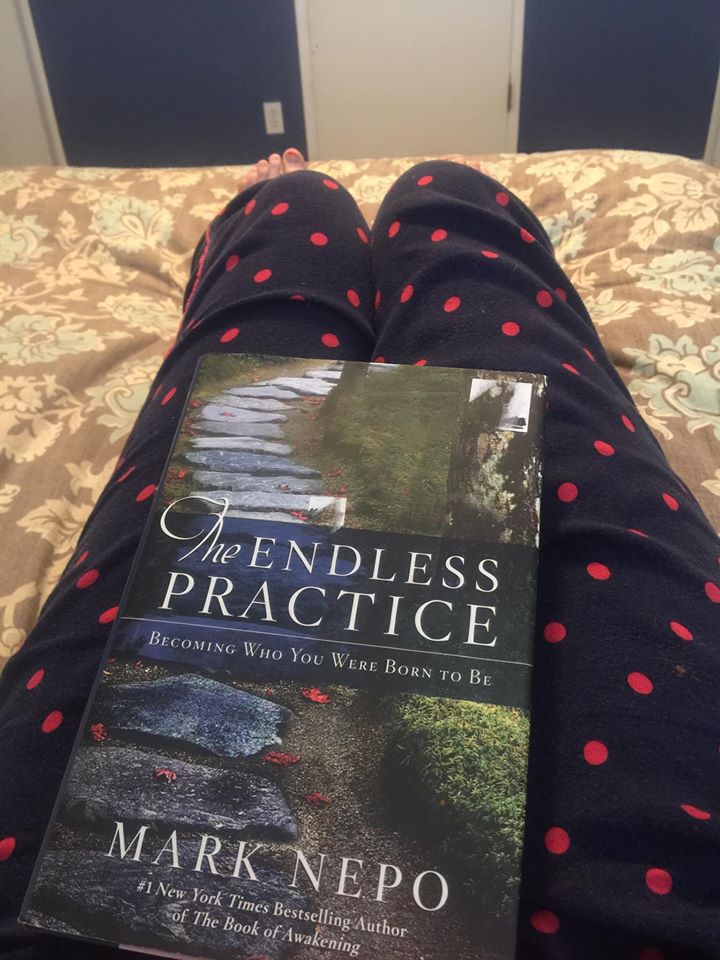
Mark Nepo, in his book, The Endless Practice, talks so beautifully about how problems – so often of our own making – occur when our soul that wants to soar like a hawk is bound to the earth. It’s not the challenge of being on the earth but in our resistance to being rooted that causes conflict.

Like I am reminded of in my 12 step program, “Acceptance is the answer to all my problems today.” When I get into grr over not getting my way, it’s never the situation itself that is the problem but the fact that I fight what I think I deserve. I argue with people not meeting my expectations (as if I know all the answers?) And in the middle of that tug of war I forget to take a breath and ask God for help. It doesn’t have to be a big drawn out prayer. “Help!” works just fine.

Awareness – A Double Edged Sword

Awareness is a beautiful thing in my life, because I’m learning ever so slowly that the only person I can truly control is myself. In times of quarantine, it’s particularly lovely to remember this. But it’s also a painful lesson to learn, because “good parenting” and “toxic control” for this A-personality sometimes get mixed up. I take things too personally and really, that’s not good for anyone.

For you parents of kids out there – especially teens – tell me how you are managing setting expectations but letting go when they do what teenagers do!

Tic Update

For those of you who have been following me for a long time, I want to give you an update on Stink with his permission. That update? He barely tics at all. Some of this is because he is now 17 and a half. Tics naturally slow down as the teen years come to a close. Some of it is because he is not that stressed out anymore due to a more lax school schedule. But a lot of it, and I really believe this last bit, is because I have calmed down.

I’m a big believer in energy, and as woo woo as this is going to sound, I believe that my energy and his are very interlinked. We have always “gotten” each other so well. When he started ticking as a young boy I was so worried about it that I’m convinced my spike in fear created additional spikes in his symptoms. When I calmed down – with a boatload of work on myself and faith in something greater than me – he calmed down.

One of my readers here, Jeff, talks about his Tourettes sometimes. So, Jeff, I want to know: do you agree with any of my thoughts above? That in releasing my fears of tics that his tics have settled down? Would love your opinion.

Isaac, Abe and Eye Rolls

I’m reminded of that Old Testament chapter where God asks Abraham to put Isaac on the altar. Good Old Abe doesn’t want to, but he trusts God, and when he does, Isaac’s life is spared.

To me, this is not a story to be taken literally, but rather it demonstrates what happens when we place our idols down. I was making Tourettes an idol, and when I said, “God, you take Stink, he’s not mine to control” peace was granted both for Stink’s symptoms and my own internal emotions.

Happy Monday! I hope you are finding some peace within the fear of the virus and some love despite less than perfect circumstances.

Whether your kids tic or not, or drive you crazy (or not) I wish you nothing but the best as this week goes on. And be good to yourselves! You – and the kids – are worth your peace of mind.

Andrea

Until next time,

My book is available on Amazon. (Note: It’s a special ed journey… your kid doesn’t need to have Tourettes to relate!) Follow me on Twitter@AndreaFrazerWrites or on Facebook. )

Want to Write a Book? Contact Me!

Need an editor, a mentor or a ghost writer? Contact me at HappilyTickedOff@Gmail.com or find me on Facebook @AndreaFrazerWriter

Coaching and Wellness, education, self improvement, teenagers, Tics, Tourettes, Uncategorized, writing

Everything I Learned About Parenting I Learned from Tourette Syndrome (An update on Stink who is, gasp, 17!)

Stink, 17 and Pip, 15

Some of you know me from reading my book, Happily Ticked Off. Others of you found me by Googling “tics and Tourettes” and voila — here I am! Others of you might have found your way through a Tourettes forum or randomly googling “Misophonia.” Either way, I’m super stoked you are here.

Tourettes and My Son

My son was diagnosed with Tourettes when he was 4. Tourettes is a disorder that causes uncontrollable verbal and physical tics that change in nature and last up to one year. My boy’s tics never included cursing (which happens in only 10% of kids) but did include quite a deal of vocal sounds (gulps, clicks, throat clears, coughs) and physical movements (neck stretches, arm thrusts, neck rolls, eye blinks).

He’s now 17 years old, 6 foot 6, and a year and a half from heading out to college. For a long time I wrote about my adventures with this unknown disorder on my blog, HappilyTickedOff. Armonia Press even published a book about it which, to be honest, is one of the best things I’ve ever written. I didn’t get rich off of it, but every time I get a small residual check, or a tired mom from Kansas writes me to tell me that I made her laugh and cry over her pea soup or in the carpool line, I’m beyond thrilled.

Why I Ceased Writing About Tourettes

For a while my son told me to stop writing about him altogether. Like my drinking days, it was okay until it wasn’t. And so, just like I honored my kids by getting sober, I did the same thing when it came to writing about him.

I continued to write on my blog the past five years. In addition to that, I also dipped my toe into the water of education. I became a special ed aid and then a substitute teacher. But by far, my greatest teacher has been my two teenagers. And while I write quite extensively about my daughter, such as this post, but this particular article? It’s all about my son. And it was his idea, which shocked the hell out of me.

Why I Started Writing Again

“Mom, if you want to write about me and my Tourettes again, it’s totally okay,” he told me one day while I was making him an after school snack. By “snack” I mean “meal.” And by “meal” I mean four gluten free veggie tacos with a huge side of guacamole.

“Why is that?” I asked him, trying to sound cool but on the inside more thrilled than a new Grace and Frankie episode appearing on Netflix. I’ve missed talking to other moms about this often misunderstood syndrome.

“I am super happy with myself,” he told me. “I have so many friends. I’m loving my computer programming.” He went on to add, “I guess because you’re okay with me, I’m okay with it.” And that last piece, my friends, is why I’m writing this article.

I Was Not Okay with His Tourettes for a Long Time

Before you judge me, I want to be clear that I didn’t want to not be okay with his syndrome, but I struggled. Part of this is because I was not confident in myself. I worried that I would be judged. And I was worried about him and how he’d be treated. (Yes, he was bullied a bit for noises he couldn’t control.) But most of all, I had a condition I didn’t know I had called Misophonia where certain noises drove me nuts. Combined with a marriage on the rocks, and drinking more than I cared to admit (until I had to admit it) the grunts and squeaks sometimes put me over the edge.

As I mentioned in this article on Misophonia, our relationship was super strained with all the “fixes” I tried to get him to stop making vocal sounds. I tried everything from:

  • Acupuncture
  • Special diets
  • Meditation
  • Medication
  • Supplements
  • Therapy…

And on and on. He went along with the program from ages 9 to 13, but the rubber hit the road for me when I realized:

  1. He doesn’t want me to fix him.
  2. He didn’t mind his Tourettes

Just like drinking, I had to give up my need to fix him or our relationship would be doomed. So I did. Here are just a few things I implemented over the past 4 years that changed our relationship from one of strife to one of safety and calm. (And, my friends, I’m convinced this is a huge reason why he is doing so well today.)

How I Gained a Safe Relationship With My Son

  1. Questions: I ask more questions than I give commands. If I’m not sure about his grades, I ask “Why is your Chemistry at a C?” instead of demanding, “Why are you not at an A?” Lack of stress has greatly reduced his tics, too.
  2. Positivity: I keep my negativity to myself. If I’m frustrated with a writing project, or a lack of a writing project, I leave that outside before I walk in the door. In doing so, I’m not bleeding all over someone who never cut me.
  3. Listening: I stopped talking so much about myself and just asked about him. Often times I’d just sit on the couch with a book. If he came by to read with me, great. If he didn’t, that was fine, too.

By just being a still presence I was creating a safe harbor for him to just be him, tics and all.

4. Self-Improvement: In working on myself, and realizing what I needed to change (less drinking/more writing) I stopped trying to live through my son. I mean, it’s one thing to want your kid healthy for him. But I was doing it for me. And friends, that sucks.

5. Laughter: We laugh a lot. He is the worst joke teller in the world, and also hilarious. Ex: “How do you call someone who collects phone books?” Answer: “You don’t. They call you!” Stink (his nick name) and I pun like professional ping pong players. We have Scooby Doo marathons. And we trade ridiculous memes over text. Each example is super small, but it’s the little intentions that build a strong relationship over time.

6. Forgiveness: Last year, as part of my 12 step program, I made an official amends to him for asking him to change his tics. I cried. He listened. And he honestly, truly, forgave me. I also made a promise to never ask him about his tics again. Because we have gotten so close over the past four years, he believed me. And I’ve stuck to my word.

My Son Barely Tics Now

I’m writing this post to tell any of you scared mamas that not only is my son okay emotionally, he’s okay physically as well. He rarely tics these days. Some of this is because he is 17 and tics do, indeed, subside. But some of it is also because he is not stressed. Nothing, and I mean nothing, is more important to me than how my son feels about himself. If it means me backing off and letting him go to a Junior College instead of a 4 year university so he can navigate high school at his pace, I do that.

In the end, more important than curing Tourettes is my son’s keen awareness that his mother accepted him 100% for who he was in his soul. Everything else doesn’t matter.

No Regrets

I am proud to say that despite making mistakes raising this beautiful boy, I have no regrets. I, like everyone else on this globe, am a human being. I wasn’t raised by perfect parents. I got bullied in school by kids who were also not perfect.

Right or wrong, I placed many of my unhealed issues onto my son and raised him through a lense of fear. But I’m not doing that now.

Your Child Will Be Okay — Especially If You Are Okay

I want to tell you that I know how hard it is to get a diagnosis you were not expecting. But I also want to remind you that your child is not his or her label. He or she is their spirit. I can 100% promise you that if you nurture their spirit, far more than focusing on their disorder, everything will be just fine.

Think of Tourettes as a giant invitation to a party on life’s terms. It might not be easy, but if you allow it to be, it just might be the best adventure you’ve ever been on.

Want to Write Your Own Memoir? Contact Me!

Are you a writer who wants to write a memoir? I can coach you! Reach out at Andrea.Paventi@Gmail.com or find me at my blog www.happilytickedoff.com. You have a story and I can help you make it happen!

Until next time,

My book is available on Amazon. (Note: It’s a special ed journey… your kid doesn’t need to have Tourettes to relate!) Follow me on Twitter@AndreaFrazerWrites or on Facebook. )

education, faith, God, parenting, Tics, Tourettes, writing

Writing Wednesday: Happily Ticked Off, Chapter 1

4

The the next couple of months for writing Wednesdays I am posting a chapter of my book, Happily Ticked Off. If you like it what you see, you can buy one in the link below. If you just want to read it week after week for free, that works, too.

Why Post a Chapter a Week for Folk? (Um, that’s putting it up for free, Dumb Ass.)

My goal is to get people to think about their own writing projects as well as give some love to moms and dads out there who have struggled with this condition in their households. (Though it was dedicated to the mamas.)

This book was not about fixing Tourette Syndrome. It was about helping people have a transition in their thinking: To know that while they might not be able to change a disorder they most certainly can use it as an opportunity to transform themselves.

For those that just want quick fixes, I say go for it. There’s a ton of resources out there to promise you the moon on that. But here’s the real truth: if you don’t come to terms first with your perspective on the diagnosis… on any diagnosis… you might end up like me: frustrated and discontent when the next weed comes along to ruin your perfect garden.

Life doesn’t always happen to us as we expect. But it’s what we do with our challenges growth opportunities that can make us bitter or make us better. While I’m still unsure sometimes of my path (just ask my bff Tuskany or Amelia) I know that when I remember I don’t know the answers, but God does, I stop struggling and just live in… what’s that word? Oh, yeah. Peace.

And so, with no further adieu, here you go! Let me know what you think and let me know about your projects, too!
book cover

Dedication

This is for you, Mamas.

When my son was diagnosed with Tourette Syndrome seven years ago, I encountered loads of disheartening information on the internet about tics, ADHD, OCD and disturbed children with behavior problems.

I found blogs full of victimhood stories and medications gone wrong.

I found a few helpful but ultimately dry informational books written from medical and nutritional viewpoints on how to suppress tics through natural or pharmaceutical means.

What I didn’t encounter, however, was a book on humor, support and most importantly, hope.

So I wrote one.

This book is not just for mamas dealing with Tourette Syndrome. It’s a love letter for all you moms dealing with an unexpected diagnosis. It’s the book I wish someone had written for me when I was hopeless, angry, and feeling so very alone.

It’s my sincere hope that this mom-moir will serve as one giant hug for your fears. May it whisper into your heart, “You did not cause this disorder. You are strong enough to handle it. Your child is perfect despite some medical challenges. You are not alone. I am here. YOU CAN DO THIS.”

For all you mamas out there who are hanging by a thread, I’m asking you to tie a knot and hang on. Happily Ticked Off was written for you.

****

Prologue

Happily TICked Off


“Your son has Tourette Syndrome.”

I looked up at a stern woman in her late 30’s. She had her arms folded tightly against her heart. (If she had a heart. The verdict was still out.) Black and silver hair spilled down her white lab coat, covering up her name tag. “Dr. Badbedside Manners.”

Combined with her pale skin and silver jewelry, she looked like a cross between Stevie Nicks and the Bride of Frankenstein. The diagnosis she just handed me didn’t make me less terrified of her.

Stop being a wussy, I told myself.

I glanced at the diploma on her wall and collected my thoughts. I had to admit, only a delusional freak would be surprised by her words. After all, my four-year-old had been referred to her only after I had already depleted every cent of my family’s HMO deductible on allergy testing, vision tests and more pediatric visits than my son had Scooby Doo band-aids. I was hoping all these visits would provide an answer to why my kid would transition from clearing his throat several times per minute to rolling his eyes side to side in rapid succession.

How I loved the pattern of those eyes on my retro kitty tic-toc clock! The predictable back and forth motion never ceased to instill a profound sense of joy and fun as I sipped my morning coffee and stared at them. Seeing them on my child? Not so much fun. Far from viewing it as kooky and eccentric, those eye rolls inspired nothing less than primal fear.

And anger.

Which… I’m ashamed to say… I took out on the kit-kat clock earlier that morning.

Only a bad mother would take out her irritation on a preschooler.  But that cat? She was fair game.

First she lost her tail. Then she was shattered to bits in a moment of pure frustration when my son morphed from eye rolls into unexpected gulps. Those tics, and that cat, had to go.

I tried to squelch the tears brimming behind my eyes. I wish my husband were here to hold my murderous little hand.

He was not. And that stunk.

Perhaps it was because I was alone on that ill-fated day that the revelation hit me so hard. Perhaps if Rex had been there to steady me . . . to wrap me in those strong, lithe arms of his . . . the blow would have felt less intense.

Lucky for me, I recovered quickly. I was the queen of composure.

“Tourette’s? You mean… But how…Wah wah HUH?”

Dr. Badbedside Manners didn’t twitch, and not just because she didn’t have Tourette Syndrome.  Likely she was used to moms like me. Moms who, despite hope against hope … despite seeing the signs themselves for months on end …were banking on a different outcome.

I’d hoped to hear he had a vitamin deficiency. Instead, I was handed a nightmare. With nothing more than a few words about this little known syndrome, I was told to come back in six months.

When I called my husband on the car ride home, I had only one statement: “Nicky has Tourette Syndrome.”

My husband had only one answer. “What happened to the kitchen clock?”

I hung up the phone and sobbed like a baby.

And that, my friends, was the beginning of a hellish six years.

Determined that no mama should go through what I did, I wrote a book.

This is the story I wish someone had written for me. My hopes are that it saves not only people’s sanities, and their marriages, but also perfectly innocent kit-cat clocks. No time-piece, no matter how annoying, deserves that kind of brutality.

This is my journey.

This is my story.

If you’re up upset at your child’s diagnosis, whether it be T.S., Autism or some other spectrum disorder, I want you to know I’ve been there.

I’ll have you Happily Ticked Off in no time. How about we start with a few facts I wish someone had sent to me during the first lonely, dark leg of this journey.

 FACTS and HOPE

 Tics or a T.S. Diagnosis

If you’ve picked up this book there’s a decent chance your child has recently begun to tic or has just been diagnosed with Tourette Syndrome.  You’re pretty ticked off.

My son was diagnosed at 4 years with T.S.. He’s now 12. He’s well-adjusted, funny and loaded with friends. With the right plan and perspective your child can have a similar outcome.

Freak-out time

You want to believe me, but you’re still panicked. Second only to dismay over this new diagnosis is the regret that you didn’t invest stock in the Kleenex Corporation. You can’t stop crying.

Neither could I. I’d sob to myself, my friends, my family – even bewildered gas station cashiers who simply wanted to sell me a Diet Coke – not hear a dissertation on the boring clinical definition of Tourette’s.

Boring Clinical Definition of Tourette’s

Named for Georges Gilles de la Tourette in 1885, Tourette’s consists of both vocal and physical tics that wax and wane in nature and last up to one year.  I’ll get into more detail later, but for now, let’s move on to something you can really relate to… like whining!

 “What happened to my perfect little boy?” was my broken record, twenty four hours a day. No one had an answer, but I have one for you: nothing has happened to your child. Your child is still perfect. Just hang tight. I survived this initial scary period and you will, too. I promise.

It’s Not Fair

You know life isn’t perfect and this condition could be a heck of a lot worse, but you’re still upset. You can’t see the big picture when you’re living the unsettling, fearful present.

In the subconscious recesses of my mind, I knew Tourette’s would one day be viewed as a present, but that didn’t keep me from spending the next seven years looking for the gift receipt. “Thank you, but no thank you. I appreciate the thought, but I’d like to return this for something else. Perhaps a good case of musical genius, a pitcher’s arm, or the ability to burp the Ave Maria.”

The Symptoms

Maybe you have no official label yet, but something is wrong and you’re freaking out. What you used to see as your child’s occasional quirky habits has morphed into unrelenting blinks, eye rolls, jerky head nods and spastic facial grimaces.

It’s hard to watch your child go through this, but stay strong. Tics are like visiting in-laws who invade over Thanksgiving – they’re annoying, can drive you to drink, and just when you get used to them they take off as quickly as they arrived.

The Nature of Tics

Like the departure of your extended family, you feel immense relief that the tics are gone. But Christmas is just around the corner. You have a deep sense of foreboding that those tics – and those in-laws – will be back. What if this time they bring friends?

It’s true that after a quiet period, tics often return. Sometimes kids exhibit the same tic as before and add a different one. Sometimes one tic goes completely away only to be replaced by a new one altogether. Like your Aunt Sally, tics are eccentric and always changing. At least they don’t wear housecoats and smell like old musk.

The Evil of the Internet

You are a normally well-balanced person, but you begin to worry something more serious is at the root.  After searching like a mad woman on the internet, you’re bombarded with hundreds of frightening outcomes for your child.

Seriously, this isn’t helpful. Turn off the computer. (Okay, fine. Don’t listen to me. Keep researching deep into the night like a crazed lunatic. I did the same. But let me reiterate THIS ISN’T HELPFUL.)

Perspective Lost

You begin to slide down the rabbit hole. In that dark pit, you become dizzy and disoriented. You lose perspective. You go to dismal places like brain cancer.

It’s not brain cancer. Your overworked mama brain, however, is spinning like a jacked up tilt-o-whirl on truck stop java. Stop the ride!  Minus some extra dopamine, your child’s brain is perfectly healthy.

Perspective Gained

In most cases – as will be the journey relayed in this book – T.S. and tics remain mild to moderate until adulthood.  Then like your wonky Uncle Donny and Cousin Frankie, they disappear altogether. (Pssst…it’s such a relief no one goes looking for them!)

Focusing on positive outcomes can really keep your negative thinking in check. If you can’t instantly change the tics, change your thinking.

Severe Cases & Seeking Medical Attention

In extreme scenarios (which you’ll get plenty of if you don’t listen to me and scour the internet into all hours of the night) you’ll find cases of children screeching, spitting, jerking and having to be hospitalized.  This is rare. The thought, however, is understandably upsetting.  As with mild tics, it’s always advisable to seek medical attention.

Start with your primary care physician who can then refer you to a neurologist if needed. Don’t be surprised if, after seeing your pediatrician, they seem very unconcerned. Your “emergency tic OH MY GOD IT COULD BE SEIZURES” situation is very commonplace to doctors. It can take months to see a neurologist. I say this not to frustrate you but to assure you that your child isn’t the first one to ever experience this.

Identifying the Triggers (as well as the ever-important legal term known as “Butt Coverage”).

I am not a doctor. I am not a certified nutritionist. I am not a psychologist. I am, however, a mother who has been dealing with Tourette’s for over eight years. This book will share what has eased my son’s symptoms, what has exasperated them, what has eased my symptoms of panic, and what has exasperated them.

Even if your child is dealing with an acute onslaught of tics, the present doesn’t need to indicate the future. Many mothers, with time and patience, have pinpointed triggers for their children’s symptoms. Once these triggers were eliminated, they were able to drastically reduce the tics.

Medication vs. Supplements

You are not a patient person. You want to stop the tics this instant and are bent on getting a prescription for Clonodine or Tenex quicker than you can say Giles De la Tourette. You want a quick fix, and medication is your answer.

That is a very personal choice and I support you on that journey.  I have considered this possibility for my own son, especially now that he’s in those tumultuous ‘tween years. I’ll keep you updated on this at my blog, http://www.HappilyTickedOff.com.

Self-Esteem

Many of you will opt for a more natural route to easing tics, but you worry about your child’s self-esteem while you work out a game plan. You don’t want him teased. Your heart breaks that some nasty kid will poke fun at his arm-thrusting tic.

I understand your concern. I was crushed at the prospect of some bully tormenting my baby. But I set my emotions aside and focused on a more important reality:  Cruel kids are going to tease other children whether or not those children have tics.  My son’s heart, character and personality would define him, not his tics.

“That’s easier said than done,” you might wail.

To that I will respond with a resounding, “Duh.” But with practice, you’ll learn to focus on your child’s strengths, not his tics.

Mild Tics/Mild Annoyance

If your child has mild tics, there’s a good chance he doesn’t notice them or isn’t bothered by them.

This last statement is hard to believe, but it’s true. Your kid might be happily watching Spongebob, coughing like a bronchitis-stricken seal six times a minute, and his only complaint at the end of the show will be, “Mommy, I could really go for a bologna and cheese sandwich.”

Your Child’s Life Is Not Over

To highly tuned-in mamas like yourselves, your children’s inability to be affected by tics is baffling, because every minor gulp, throat clear and tongue click will be magnified into LOUD! RICOCHETING! EXPLOSIONS!  They will boom like a foghorn in your ringing ears, taunting you that your child’s life is O-V-E-R.

Your child’s life is far from over. Tics or T.S. is not a death sentence. The only thing that needs to die is your old vision of what you thought your child’s life would look like. He can experience as much success as a non-ticking child.

It’s Not Your Fault

I’d lie if I said I have 100% embraced T.S., but with some experience under my belt, I have better days than worse days. I might make my kid eat broccoli on purpose, but I didn’t give him T.S. on purpose. I don’t blame myself for his condition.

Whether your child has a unique case of T.S. or he had a genetic pre-disposition to it, stop feeling guilty about it. Focus instead on passing down other incredible gifts to your child, such as the ability to stay curious about life, the ability to love, the ability to experience endless joy and the ability to tell a killer joke. (Never underestimate that last talent. It far surpasses tics any day of the week.)

You Feel Like You Could Die

“I’m devastated,” you might moan. “Acceptance is about as likely to happen for me as winning the Lottery. And frankly, I’d trade in tics for a million dollar jackpot any day of the week.”

 Unlike tics that often appear out of nowhere, transformation doesn’t happen overnight. You’ll need time to both accept this crazy syndrome as well as come up with a protocol that will lessen your child’s symptoms. You need to be patient.

Patience-Schmatience

“How can I be patient?” You’ll snap. “As if I didn’t already have the stress of bills, housecleaning, work and a husband who, for the record, seems eerily unshaken by these tics and has no idea why I’m freaking out, I now have to listen to lip smacking five times a minute for three hours straight?!?!”

To this I’ll respond, “Patience comes when you stop paying such close attention.”

And to that you will respond with something that sounds like “I hate you, you self-righteous –know-it- all- bad-bad-lying-liar-who-lies writer lady.”

Go ahead. I can take it. I can also handle your protests about how you’ve tried not to pay attention to your kid’s noises, but you can’t help yourself.

It Gets Better

“There he goes again!” you’ll complain, as you read this introduction and scan for tics with the obsession of a hound dog sniffing out convicts. (Congrats on the multi-tasking, btw.)

To all this I will heartily add that I have been there. I get it. It will get better.

No one Understands!

You very likely will roll your eyes, wondering for a brief moment if you yourself have tics but then realize you’re simply being catty to me which, again, I forgive you. You will then convince yourself that no one else could possibly understand your frustration and hopelessness.

But I do understand it.  I have been locked in car rides through the desert where no amount of country music could drown out my son’s post swimming throat clears. For days afterwards, similar to Old Faithful, I couldn’t help watching and waiting for his well-timed and unremitting eruptions.

Other People Don’t Notice Tics Like You Do

“Old Faithful is an excellent analogy,” you agree, “because everyone is going to stare at him in public – clapping and jeering at this unique and boisterous spectacle.”

Unlike visiting a national monument, most people are not interested in the incredible national treasure that is your child. They simply will not notice the minor sounds and vocal movements. (Note: As a narcissist in transition, I am constantly working on that last piece of advice myself.)

No Room for Fear

But I’m terrified he will be ostracized by his peers!  What if he barks after busses and curses the F-Word in circle time!”

Get that fear a muzzle, because like your bad high school boyfriend, it lies like a rug. (For the record, less than 10% of T.S. kids uncontrollably curse. So let’s keep this worry in check and take it one step at a time, okay?)

Moms’ Survival Tactics

You consider getting earplugs but figure good mothers would never avoid the sounds of their children. You berate yourself for finding excuses to fold laundry to avoid watching your daughter blink and jaw thrust over her chapter book.

One of the best mothers I know rearranged her houseplants so she wouldn’t have to see her daughter nod her head over and over at the breakfast table.

Many people would call foliage adjustment poor parenting.

I call it brilliant. It’s a perfectly acceptable survival mechanism.

Perseverance

By now you’re not sure if I’ve completely lost my mind, but a small part of your brain is telling you I might be making sense. You agree to try out a little patience, but aren’t sure how to start.

How about right now?

Take a deep breath.

Tell yourself that for just this moment everything is going to be fine.

All you have to do is be your child’s mother – in whatever state he or she is in.

Tell yourself that you don’t have all the answers, but you’re going to try your best to take it one step at a time.

Take another deep breath.

And now allow me to share a little story with you as you take your first jaunt down that long and windy road of patience. This inspirational tale is one I heard long before my Nicky was diagnosed with Tourette’s. On rough days for me – which at the beginning were every day – its encouraging message would soothe my brain like a good cabernet.

Side Note: Drinking

During the early days, a bad cabernet worked just as well. If you, too, find yourself drinking a bit more to calm down at the end of the day, you wouldn’t be the first frazzled mama to do so. But I encourage you to keep it in check. T.S. isn’t going away anytime soon. Does your ticking son really need to be flanked by a slurring mother hopped up on Two Buck Chuck? And really, it’s going to be hard enough to find time to cook healthier meals, schedule in more exercise, shop for supplements and fit in a meditation schedule.  Combined with AA meetings, you’ll soon find yourself ticking, too. Careful, okay?  

Now, back to our regular scheduled programming of inspirational story-telling.

Story Time

One of my favorite all time stories about special needs is called “Welcome to Holland.” I took the liberty of adapting it for my experience with Tourette’s.

One day a family of five boarded a plane headed for London. It was winter, which meant their luggage was filled with sweaters, thick wooly socks, mittens and scarves. The mother, who had dreamed of this vacation ever since she had children ten years prior, had planned out the entire trip in painstaking detail. They would have tea near Buckingham Palace after shopping at Harrods. They would tour the Tate and take a family Christmas photo in front of Big Ben.  They would catch a show in the West End and go to mass at St. Paul’s.

After two hours on the plane, she looked over at her three children who had magically fallen asleep in the seats between herself and her handsome husband. She grabbed her mate’s strong hand, smiling at how perfectly everything had fallen into place.

At one point the captain’s voice streamed over the P.A. system.  “Ladies and Gentlemen, thank you for flying with us today. Due to some unexpected orders from the ground crew, this plane will no longer be flying to England. We will be changing directions entirely and landing in Africa. I can’t give you much information other than we cannot alter our course. You will have no choice but to make the best of the new arrangement. We’re not sure when we’ll be able to get you back home but you all seem like capable people who can wing it just fine. So, with that in mind, enjoy your new destination!”

Understandably, the mother was horrified at this news. Her husband remained cool and collected. She was both grateful, and horrified, that he wasn’t as freaked out as she was. How could he be so calm??! How could this enormous error happen? She wasn’t prepared for this abrupt switch of plans! This was not the way her dream vacation was supposed to go. The remainder of the flight was spent in abject misery as she ruminated, sulked, cried, moaned, hollered and generally cursed her fate.

By the time the plane landed, she was in quite a quandary. While this was one of the most unsettling experiences of her life, she also knew that falling apart would not help anyone. She’d have to be strong for the kids. She’d have to lean on her husband when she could. But mostly, she’d have to lean on herself. She’d attempt to make the best of it. What choice did she have?

Once on the ground, the luggage never arrived. Everyone was sweltering in their woolen sweaters and itchy pants. She borrowed a pair of scissors from a ticket agent and cut off the sleeves, which they used as headbands. She took the scissors to their pants, made makeshift shorts and hailed a taxi.

As this disheveled family of five crowded into a cab, the driver had a good laugh at their outfits. It turns out he spoke English and asked what happened. Against her normally private nature, she told him. He invited her family to his home and she said yes. Clearly she needed help and couldn’t rely on herself anymore.

For the next two weeks, her family did not shop. They did not tour museums. They did not eat at restaurants.

They ate home-cooked meals around a plain wooden table with the taxi driver’s wife, her sisters, their kids and 20 other people with names she could barely pronounce on Day 1  but by Day 20, she knew them as well as her own family’s names.

The kids ran around barefoot with  children who didn’t speak their language but sure knew how to laugh.

Her husband helped re-upholster the taxi driver’s car, which earned the family some extra money, which they turned around and used for a goodbye feast when the time came to finally fly back home.

With bellies full of food and hearts full of gratitude, they said their tearful goodbyes and boarded the plane.  As they flew back, the mother couldn’t help but think that Africa was a far cry from England. It wasn’t as civilized. It wasn’t as comfortable. But it was exotic. It was different. And her family bonded more in that two-week unplanned adventure in an African village than they ever would have in a pristine London hotel.

That mama, despite feeling like she would drown in despair, faked a good attitude until a true, authentic joy bubbled up from the pit of her soul. Despite not signing up for it, she made the best of the situation and had an adventure of a lifetime.

You will, too. Grab your T.S. passport. T.S. is an adventure. It might seem scary, but let this book be your road map.

Let me be your tour guide. Let my story serve to remind you that you’re not the first to take this scary trip. It’s going to be a bumpy ride, but I promise you’ll land safely with your child intact.

Buckle your seatbelt. It’s time to Happily Tick Off.

Until next time,

Leave a comment or write me at HappilyTickedOff@Gmail.com

My book is available on Amazon. (Note: It’s a special ed journey… your kid doesn’t need to have Tourettes to relate!) Follow me on Twitter@AndreaFrazerWrites or on Facebook. )
books

faith, God, Jesus, parenting, Tourettes, writing

When Life Happens For You, Everything Changes

Yes ss.jpg

Today at church Pastor Craig spoke about shame and pain. I honestly don’t remember the passage he read from in Romans, but in a nutshell, he spoke about how hard times don’t have to define us. Instead, these hard times can be used for good when we are transformed and then reach down to help someone else.

I found him in the cake and coffee line and I told him I had an edit to his sermon. At this point an elderly lady in the congregation took her leave (“Oh, Lord, it’s going to get sassy now!”) but Pastor Craig just stood there smiling. It’s what I love about him most. He’s comfortable enough with God, and himself, that he can listen… truly listen…. to other’s viewpoints without being offended. At our progressive church, it’s actually welcomed. (Both the listening and the questioning. It’s like my 12 step minus the drunk-a-logs!)

Me: “I like what you said about shame transforming, but I feel what could have been added is a piece on acceptance.”

Craig: “Go on,” he said.

Me: “I feel that people suffer a lot because they don’t admit that what is going on in the first place is not working… or that they are out of options… or have just hit bottom. If they could just accept it, then they could grieve it, give it to God, and then the beautiful work of healing could begin.”

He just smiled and nodded his head. “I couldn’t agree more,” he said.

A few years ago the idea of questioning a passage of scripture would have made me feel like a heathen. Now it feels the more I question the more welcome I am. It’s kind of like my 12 step group. If someone says, “I drank a few glasses of wine and now I’m here” people smile and offer them a cup of coffee. But if someone says, “I drank two six packs a night, had four DUIs and danced naked at my daughter’s quinceanera” raucous laughter peals out. The worse the story the better the welcome.

The deeper the death of ego the higher the resurrection of the better self.

Such radical honesty is a refreshing way to heal… to just be oneself and know one is welcome anyway. No right or wrong. Just honest truth about where one finds oneself.

I don’t know about you, but I don’t like feeling transparent and raw. I don’t like admitting that I don’t know everything. That sometimes my husband and I still fight about the stupidest stuff. That my son’s tics sometimes hit my ear drums and I just want silence. Blessed quiet. That I worry about my kids going to college or that I’m almost 50 and see yet another wrinkle creeping in. Oh my God! I can’t stop time! I can’t stop inherited conditions! Why am I not over it  yet?! Suffering suffering angst and grrrr!!!!

And yet, when I just surrender that I don’t have to have it all figured out…. That I’m not perfect, nor is my husband… that my son is doing just fine with his little noises and my kids are perfectly content with their lot in life…. that it’s just me with my ego and my hopes and my not yet fulfilled dreams not trusting God… I can then do what I should have done from the very beginning. I can tell God I am scared and sad. And when I do, the funny thing is, I feel relief. And then, like Pastor Craig talked about, I can let God in to fill the places that no one ever could in the first place. Not my husband or a non-ticking kid or script being sold or a full scholarship for my kids to Harvard.

Happiness is not when things are better.

Happiness is right now in the mess and the chaos and the unanswered questions and just knowing that I don’t need to have all the answers because God does.

When I remember that hard things life doesn’t happen to me but they happen for me to let go and let God transform my pea sized mind from negativity to absolute acceptance, life is so incredibly beautiful I could just die.

Or, at least at this very moment, go to bed. Fathers Day kicked my ass this year.

What Do You Need to Surrender to Be Happy? I’d Love to Know Leave a Comment

My book is available on Amazon. (Note: It’s a special ed journey… your kid doesn’t need to have Tourettes to relate!) Follow me on Twitter@AndreaFrazerWrites or on Facebook. )
(Note: It’s a special ed journey… your kid doesn’t need to have Tourettes to relate!) Follow me on Twitter@AndreaFrazerWrites or on Facebook. 

books


acupuncture, Tics, Tourettes, Uncategorized

Acupuncture Video #3 – Western vs. Chinese Medicine

In my third video of a series of acupuncture pieces, Martina Eberhard discusses the difference between Chinese and Western Medicine. Hint: It’s not that one doctor’s office has Fortune Cookies. Though if one did, I would make sure yours read: “Focus on you child’s gifts today!”

Happy end of weekend.

Andrea

acupuncture, Tics, Tourettes, Uncategorized

Are You Ticked Off by Negative Comments?

woman-in-a-purple-coat-1937-matisse-420x528

My last post about my tic resolutions (what I can change, what I can’t, and having wisdom to know the difference) generated quite a bit of buzz over at The New Jersey Center for Tourette Syndrome where my blog is syndicated. While many people 100% got my point of view, I got a couple pretty negative comments. I had a few reactions:

1. Wow, cool! I’m finally pissing people off! People are reading!

2. Ouch, ick. That stung. Poor me. Let me go cry to my friends on my “Twitch and Bitch” forum.

3. Logical schmodgical: What if I really am offensive?

#3 stuck to me for a variety of reasons. Let’s start a new list, shall we?

1. I’m not writing this blog just for me. I’m writing it for others. It’s my duty, as an “educator” to be sure I am communicating effectively.

2. There’s a fine line between being a narcissist and writing compelling, memoir-driven articles.

3. Most interesting realization of all: Insecure people, even among friends and family, will often skewer people they know as being narcissistic because of their preconceived views of who that person is and should be within the framework of their very own insecure lives. People have a much easier time extolling the virtues of “other” writers – you know, the ones with the pretty book jackets who end up on “The View” or “Huffington Post” – who already have stamps of approval by the public at large.

4. Referring to #3, once my book goes, said haters and cynics will suddenly tout me as being right all along. Yeah me!

5. As a Christian, I would be nothing more than a hypocrite to push any of this in their face, or respond to negativity with like. I must love them as Christ loves me, and if I can’t, enter Christ. For those in the #3 camp, this #5 statement makes me not only a narcissist but a self-righteous one at that.

6. This leaves me with #6: “If God is for me, who could be against me?’ Romans 8:31

I don’t just tout #6 as a fun inspirational flag-waving-attempting-to-accept-tics-and-not-ruffle-feathers-mama. I feel it. I care about people, but if people don’t like me, I don’t really care. It’s lovely living in this place! Come join me if you haven’t bought property yet. The neighbors are friendly, there’s lots of laughter and the wine is fabulous! (Being good on the wine, relax.)

I did write to Jeff Weber, New Jersey’s fearless web master, to be sure I wasn’t being offensive. He gave me the pass, so off I go to do what I do!

Acupuncture Update: In closing, Stink’s vocals are still gone. He was complaining of loose stools from the supplements he was on, so we backed it in half. Unfortunately, his head shakes came back full force. That’s the bad news.

The good news is that Martina, his acupuncturist, believes he just needs to adjust to it slowly and the tics will go back down.

Martina Does Acupuncture Phone Consultations: Want a consultation on how to find an acupuncturist for your child in your area? Martina is available for phone consultations. She won’t recommend specific businesses, but she’ll get a sense of your child’s symptoms and then tell you what to look for in the right person, giving you specific acupuncture terms to use in narrowing down the right professional for your child’s needs.

Martina’s Consultant Fees: She charges $40/half hour, $60/hour. She’s versed in nutrition and supplements and can lead you in the right direction. Look soon for a new video of her treating Stink!

Martina’s In-Person Fees: Martina is in the L.A. area. Consult her directly for prices. Rates go down if you buy a packaged deal which, honestly, is recommended as she will want to start treatment 3 days/week and reduce as symptoms wane.

Martina’s Contact Info: You can find info on her at the link above. For quick reference, call her at 818-378-4157.  You can also look up her website or email her at Martina@YPIH@Gmail.com

Tell her Andrea from Happily Ticked Off referred you. I get absolutely no referal fee for this, but it does help her adjust her prices to you. (Pssst. I’m takign care of you!)

Check out more posts about Tourettes at the New Jersey Center for Tourette Syndrome where this blog is syndicated.

* Picture is “Woman in a Purple Coat” by Matisse. It always inspires me to live a life of purpose, joy and love. She just looks so relaxed, yet confident. I’ll take some of that, and a back scratch. Thanks!

Tics, Tourettes

Sounding Off About Vocals – A Real Term for This Irritation!

hands-over-ears-150x150

Those of you with tics who have written to me often say that your noises bug you.

Those of you without T.S. but who live with it say the sounds can drive you batty.

I have nothing but sympathy for people with T.S. when their symptoms drive them nuts. Honestly, if my friend’s kid is ticking, doesn’t bug me in the slightest! But when it’s my kid, I really struggle.

Perhaps this is like people who have sympathy for the anxiety/neurotic/blabbermouth type. You might find me those other emotionally-inclined people funny, but if you lived with them, you might want to kick them to the closest pharmacy and insist they down a bottle of Xanax with a Zoloft chaser.

For those of you who have issues with vocals – despite feeling guilty for having such issues – I am pleased to announce you might actually have a mental disorder!

This just in from someone in my Twitch and Bitch private group: I had to share with my loyal mamas here!

You’re welcome.

Misophonia:

Misophonia, literally “hatred of sound”, is a neurological disorder in which negative experiences (anger, flight, hatred, and disgust) are triggered by specific sounds.  The sounds can be loud or soft. The term was coined by American neuroscientists Pawel Jastreboff and Margaret Jastreboff and is often used interchangeably with the term selective sound sensitivity.  Misophonia has not been classified as a discrete disorder in DSM-5 or ICD-10, but in 2013 three psychiatrists at the Academic Medical Center in Amsterdam formulated diagnostic criteria for it based on the largest cohort of misophonia patients so far, and suggested that it be classified as a separate psychiatric disorder.

The disorder comprises a unique set of symptoms, most likely attributable to neurological causes unrelated to hearing-system dysfunction. It can be described as an immediate and extremely negative emotional response accompanied by an automatic physiological flight response to identifiable auditory, visual, and olfactory stimuli. The disorder disrupts daily living and can have a significant impact on social interactions. A 2013 review of the most current neurological studies and fMRI studies of the brain as it relates to the disorder postulates that abnormal or dysfunctional assessment of neural signals occurs in the anterior cingulate cortex and insular cortex. These cortices are also implicated in Tourette Syndrome, and are the hub for processing anger, pain, and sensory information. Other researchers concur that the dysfunction is in central nervous system structures.  It has been speculated that the anatomical location may be more central than that involved in hyperacusis.

Symptoms:

People who have misophonia are most commonly angered, and even enraged, by common ambient sounds, such as other people clipping their nails, brushing teeth, eating crushed ice, eating, slurping, drinking, breathing, sniffing, talking, sneezing, yawning, walking, chewing gum, laughing, snoring, typing on a keyboard, whistling or coughing; saying certain consonants; or repetitive sounds.  Some are also affected by visual stimuli, such as repetitive foot or body movements, fidgeting, or movement they observe out of the corners of their eyes; this has been termed misokinesia, meaning hatred of movement. Intense anxiety and avoidant behavior may develop, which can lead to decreased socialization. Some people feel the compulsion to mimic what they hear or see. Mimicry is an automatic, non-conscious, and social phenomenon. It has a palliative aspect, making the sufferer feel better. The act of mimicry can elicit compassion and empathy, which ameliorates and lessens hostility, competition, and opposition. There is also a biological basis for how mimicry reduces the suffering from a trigger.

Prevalence and co-morbidity:

The prevalence of misophonia is unknown, but groups of people identifying with the condition suggest it is more common than previously recognized. Among patients with tinnitus, which is prevalent in 4–5% of the general population, some surveys report prevalence as high as 60%,[11] while prevalence in a 2010 study was measured at 10%.

The Dutch study published in 2013 of a sample of 42 patients with misophonia found a low incidence of psychiatric disorders, with the exception of Obsessive-Compulsive Personality Disorder (52.4%).  It has been suggested that there is a connection between misophonia and synesthesia, a neurological condition in which stimulation of one sensory or cognitive pathway leads to automatic, involuntary experiences in a second sensory or cognitive pathway.  The basic problem may be a pathological distortion of connections between various limbic structures and the auditory cortex, causing sound-emotion synesthesia. There are people with both misophonia and synesthesia, and many people with synesthesia have more than one form of synesthesia (there are over 60 reported types).  Misophonia may very well be another type of synesthesia.

_________________________________________________________________________________

They are now doing studies to see if there is a relationship between ADD and Selective Sound Sensitivity Syndrome (4S).  Individuals with ADD are typically not bothered by loudness of noise – rather, the softer, repetitive, common sounds are the ones that irritate, distract, anger and sometimes send them into fight or flight mode.

Photo taken from here!
Check out more posts about Tourettes at the New Jersey Center for Tourette Syndrome where this blog is syndicated.